


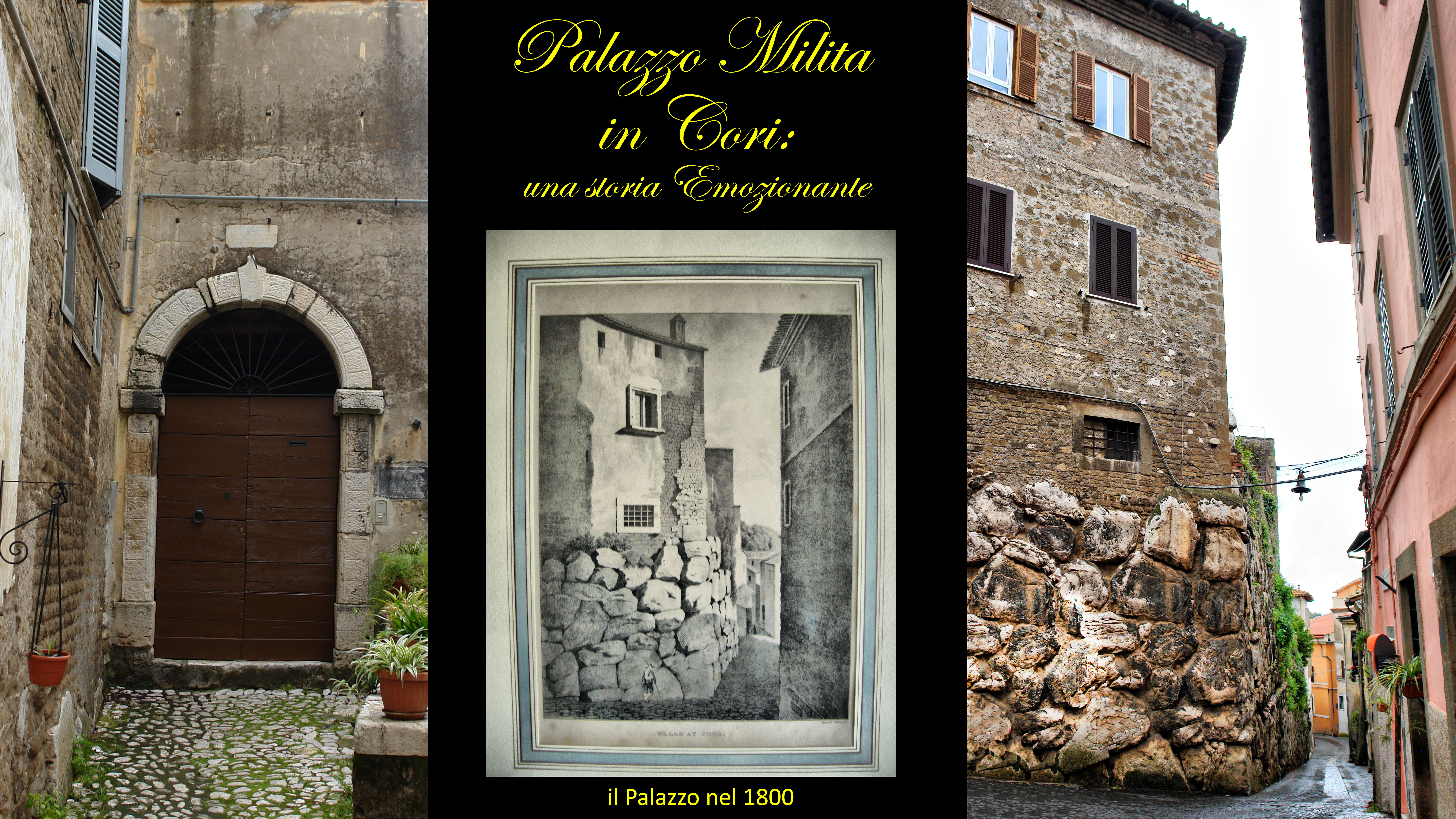
A story within History
A few kilometers from Rome, walking along the Bastion of Palazzo Milita in Cori, you can clearly feel the typical charm of places steeped in history.
Just like in the layers of a deposit, in the organization of the places and internal environments of the Palace it is easy to see the traces left by the life of the last century and then, always going backwards, the medieval organization, the signs of Roman greatness, up to to the fascinating mysteries of the pre-Roman Pelasgian Civilizations, on whose walls and walkways the Palace itself has always rested its foundations.
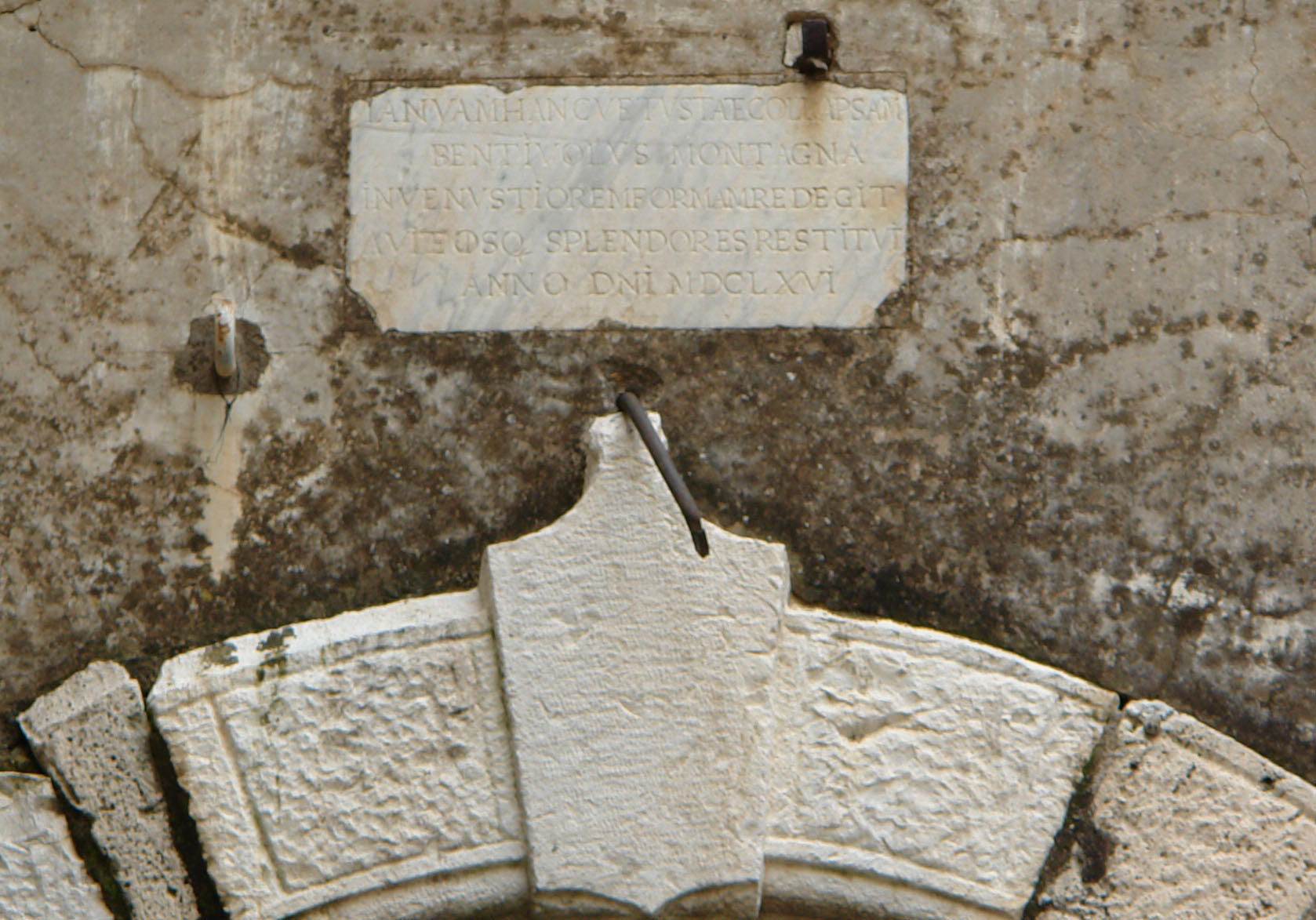
A few steps from the remains of the Temple of the Dioscuri, rebuilt by Silla (82-79 BC) in Corinthian style, the Palace was built on the ancient road that led to the Temple and incorporates, within it, numerous traces of the ancient paths and subsequent works. A plaque commemorating the restorations carried out in 1666 by Bentivolo Montagna is still well preserved on the main entrance.
The building, mentioned in numerous historical and archaeological works, has often been represented in ancient reproductions and prints by famous artists and scholars from numerous countries.
Through these pages it will be possible to immerse yourself, · between history and mythology, in a magical place where colors, flavors, aromas, culture and history mix in a surreal atmosphere, in the charm of a distant yet still present past.
A fascination that emerges from the darkness of an ancient time
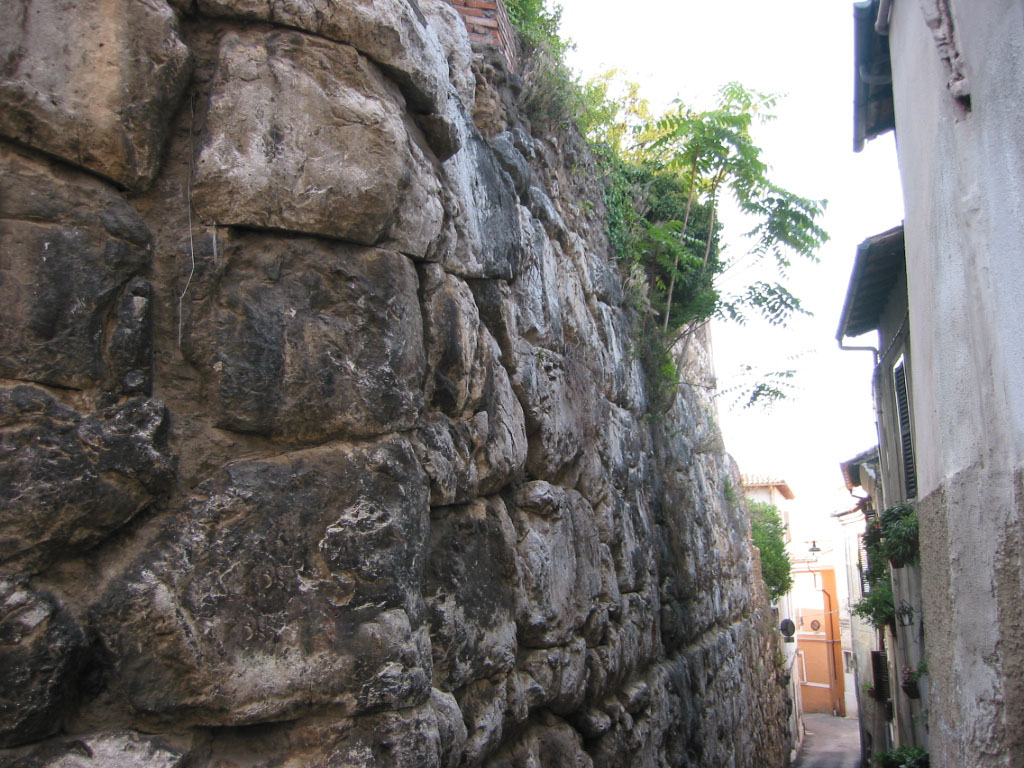
The huge boulders that, in the ancient legend, only superhuman beings such as the Cyclops could have placed in work, testify to the ancient provenance of the polygonal bastion on which the building is placed.
It is not possible to date the first construction of the bastion exactly, however the characteristics of the polygonal walls, called "Ciclopiche", lead, by type, to the work of the Pelasgians: an ancient indigenous people of the Aegean Sea and which, according to Virgil, since 2,500 BC he was among the first inhabitants of our peninsula.
This is why in the street, called Pelasga, we find the imprint and in part the atmosphere of Tiryns or Mycenae.
Various traditions give the Pelasgians a prominent part in the prehistoric process of the population of Italy and the construction of the polygonal walls of central-southern Italy is attributed to them.

The beginning of the recorded history
The first certain information about the building is that of the restoration that Bentivoglio Montagna made of it in 1666 and which is remembered with a plaque placed above the main entrance in Via Pelasga.
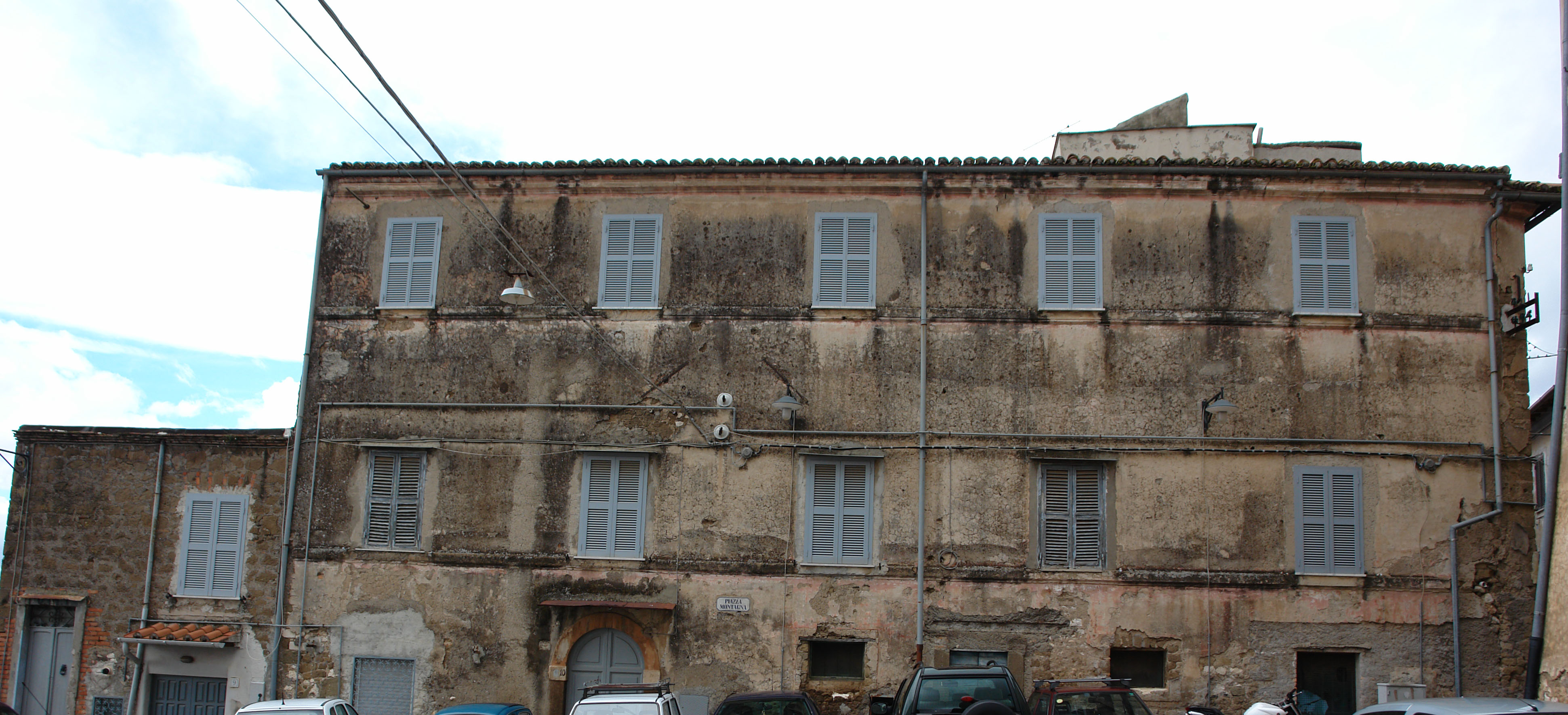
The historic Montagna Family had numerous possessions in and around Cori and is precisely mentioned in the first Citizen Statute of 1732 drawn up during the membership of Cori in the Papal State. It still bears the name of the Montagna, the beautiful square overlooked by one side of the building.
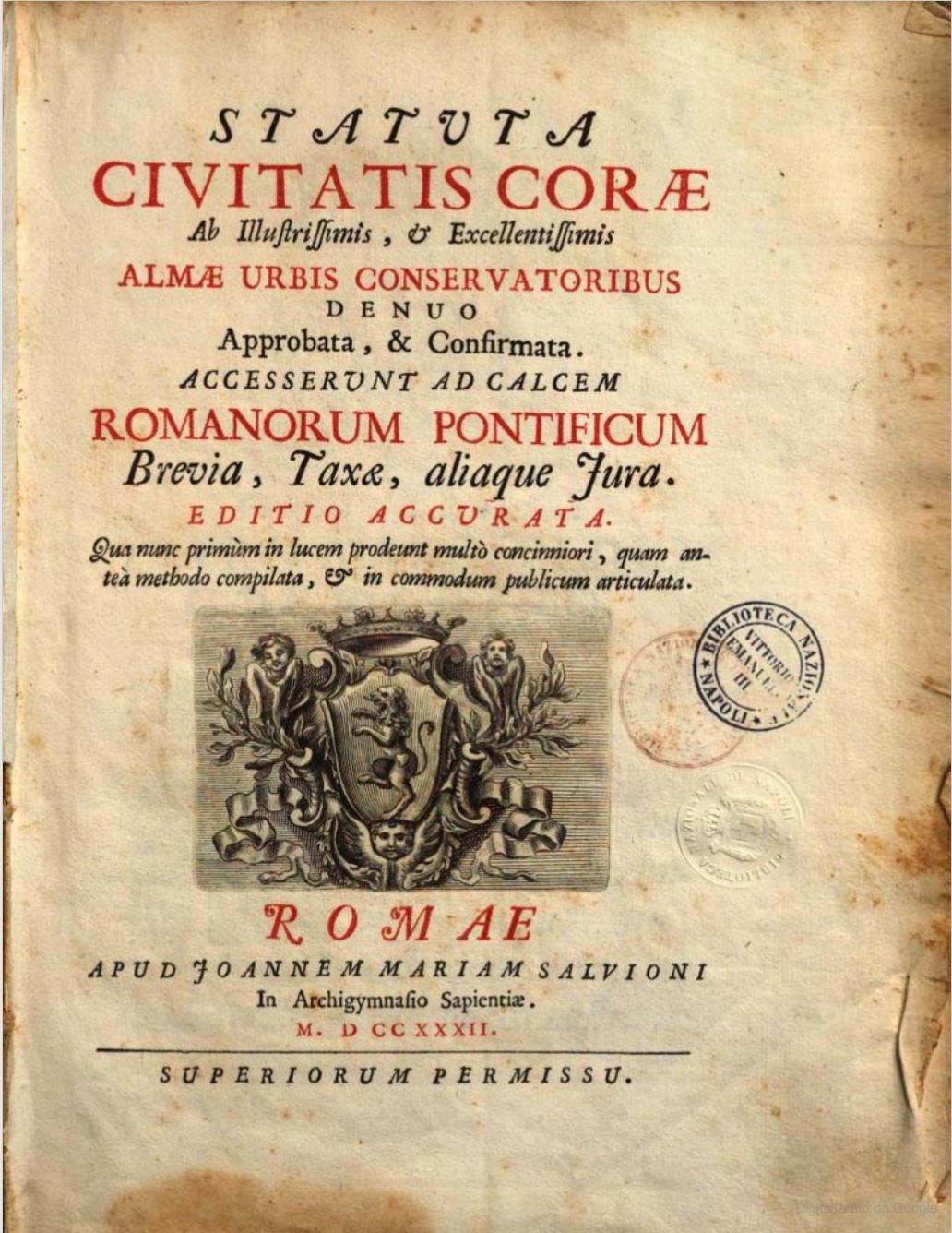
Statute of the City of Cori